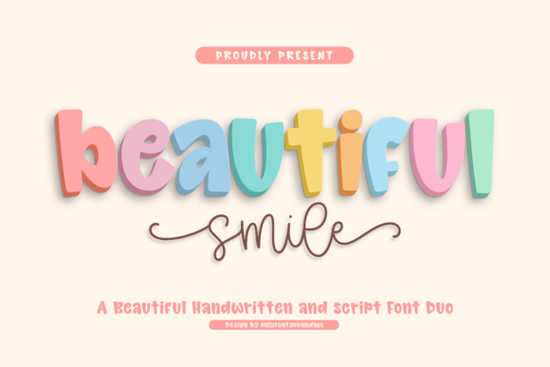
If you are looking for a typeface that feels warm without sacrificing readability, Beautiful Smile Font delivers exactly that balance for digital and print projects. Designed as a cohesive pair, it gives crafters, online store owners, and graphic designers a ready-to-use system that cuts down on guesswork when matching headlines and body text. The set works especially well for projects needing a friendly tone while maintaining clear structure and professional polish.
What Exactly Is Beautiful Smile Font?
This typeface family operates as a two-part system rather than a single style sheet. The primary display face uses chunky, rounded shapes with soft edges and a gently bouncing baseline. Those details create an inviting mood, which explains why many makers reach for it when crafting logos for local bakeries or boutique shops. Despite the playful appearance, open counters and consistent spacing keep the letters easy to scan.
How Do the Display and Script Styles Work Together?
The companion script introduces monoline strokes that flow naturally across the page. Instead of mimicking dense calligraphy, it focuses on clean connections and subtle swashes that add movement without cluttering the layout. Designers often apply the script to short phrases like daily specials or limited edition drops, where the flowing strokes draw the eye without demanding full attention. Placing a bold headline alongside this flowing line highlights each character type instead of creating visual competition. The alternating weights create a predictable visual cadence that guides readers smoothly through the content.
Where Can Designers and Small Businesses Actually Use It?
Beyond standard social media graphics, this pair adapts smoothly to several commercial workflows. Print-on-demand sellers frequently layer the display letters onto tote bags, mugs, and apparel because thick forms hold up at various sizes. Wedding planners and party hosts appreciate how the script carries handwritten warmth into digital or physical invitations. Skincare brands and subscription boxes also use it for labels and hang tags. The typeface reads clearly on mobile screens, making it useful for email headers and quick web banners. Many creators report that the gentle curve variations prevent visual fatigue during extended reading sessions, which keeps customer attention focused on the product details rather than the typography itself.
Does It Pair Well With Other Typefaces?
Because the main design already carries strong personality, it pairs best with neutral supporting fonts. A simple sans serif helps ground longer paragraphs of copy, while a structured slab can echo the boldness of the display face for editorial layouts. Testing multiple combinations early prevents unexpected scaling issues when adapting layouts for different storefront themes. Keeping a dedicated folder for approved pairings streamlines future projects and maintains consistent brand recognition across campaigns. If you want to explore similar mood boards, browsing collections like glossy bubble lettering styles shows how inflated shapes interact with clean space. Meanwhile, exploring bright display options or checking out approachable hand-drawn sets gives additional reference points for balancing loud headlines with quiet background text. For projects leaning toward retro or eclectic vibes, sampling retro-inspired alphabets or reviewing organic school-style types reveals how different baselines change overall composition.
What Should You Verify Before Adding It to Your Workflow?
Before committing to any new asset, running a quick technical check saves hours later. Download the full package and verify that all weights and alternate glyphs load correctly in your editing software. Test long lines of text at small sizes to confirm the open counters remain readable when scaled down for tags. Review the usage license to ensure merchandise rights cover your specific distribution channels. Some platforms require explicit commercial terms, while others accept standard personal-use allowances for mockups. Setting up a sample document with brand colors and common export settings lets you evaluate spacing before producing bulk assets. Running a print test on the exact paper stock or material confirms how the ink interacts with textured surfaces versus glossy coatings.
For a broader look at current market preferences, many creators monitor resources like Beautiful Smile Font to track how trending weights evolve throughout the year.
- Open all files in your design app and verify glyph coverage and alternate characters
- Export a test banner and label at intended print sizes to check clarity
- Match the display headlines with a high-contrast background for maximum visibility
- Apply the script style to short accents rather than long paragraphs to preserve legibility
- Confirm your commercial license covers your exact sales platforms and regions
- Save both editable and flattened versions before handing off to manufacturers
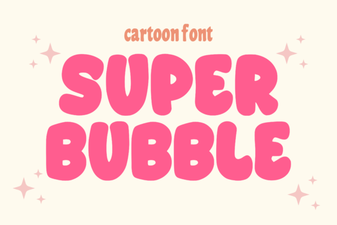 Crafting with Super Bubble Fonts for Projects
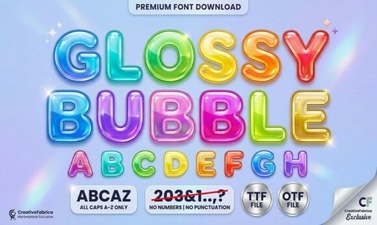 Designing with Glossy Bubble Fonts for Creative Projects
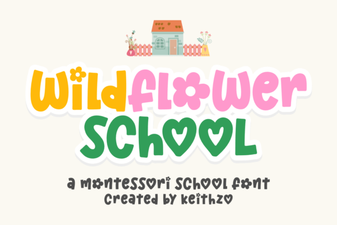 Explore the Wildflower School Font & Design Projects
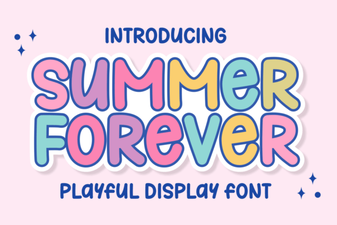 Summer Forever Font: Design Styles & Free Downloads
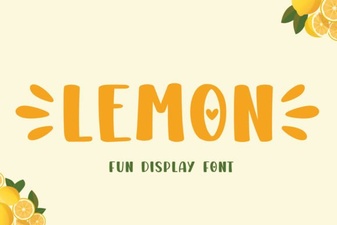 Lemon Font: Fresh Designs for Creative Projects
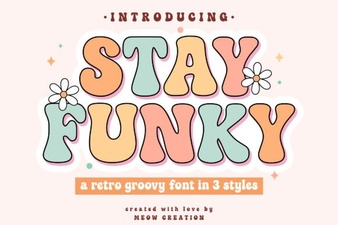 Unleash Your Projects with the Stay Funky Font