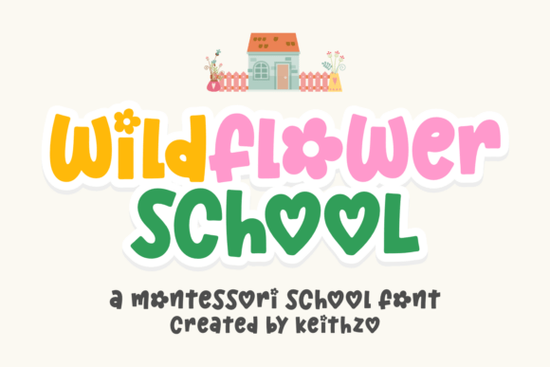
If you are designing materials for young learners or building a cozy brand identity, you need a typeface that feels approachable without sacrificing clarity. Wildflower School Font delivers exactly that by pairing soft, organic strokes with consistent spacing and reliable legibility. Designed specifically for teachers, independent makers, and small business owners, this display family brings a gentle, human touch to every project. Whether you are laying out worksheet headers, printing nursery prints, or preparing files for home production, the letterforms stay crisp at various sizes and maintain their playful character across different media.
Why does this handdrawn style work so well for educational and kids brands?
Children respond better to designs that mimic natural handwriting rather than rigid geometric shapes. This typeface captures that comfort level while keeping the x-height large enough for early readers to recognize letters quickly. Rounded terminals and a slightly uneven baseline give each word a personal quality that feels encouraging. Classroom posters, attendance charts, and parent newsletters benefit greatly from those subtle imperfections, which help text stand out against busy backgrounds. Small retailers also gain from the warm signal it sends onto tote bags and greeting cards.
How does it perform during vinyl cutting and digital planning?
Crafters often worry about thin connections breaking apart when scaling down decorative letters for mugs or car decals. This particular design solves that issue by maintaining generous stroke weight and closed counters. When exported as vector paths, the curves feed smoothly through Cricut Design Space and Silhouette Studio without requiring excessive weeding. You will notice cleaner results on matte finishes and smooth adhesives, especially when working with premium transfer tapes. Digital planners and stamp artists can also leverage the OpenType features to layer accents or adjust kerning manually for perfect badge-style arrangements.
Where should you place these letters in your daily workflow?
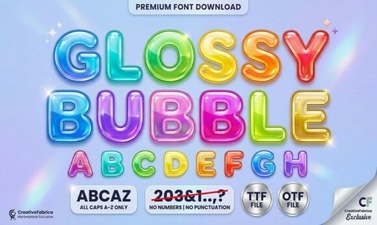
Beyond stationery and nursery walls, this typeface handles commercial applications efficiently. Print-on-demand stores frequently pair it with nature-inspired illustrations for baby clothes and bedroom wall art. Social media creators use the heavier weights for quote graphics, while reserving lighter variants for long captions that require comfortable reading distances. If your current library feels too uniform, adding complementary styles like Moment Request provides strong structural contrast for pricing tables, whereas Lemon offers a breezy alternative for summer bundles. Exploring Stay Funky and Super Bubble helps balance playful elements with bolder headlines, and testing Glossy Bubble expands your options when targeting teen demographics. Each piece fills a specific gap in a multi-style collection.
You can review the full character set, preview multiple weights, and check the standard license terms on Wildflower School Font. The vendor includes both desktop and web embedding options, which covers most independent seller requirements. Always verify the final file formats before uploading to printing platforms, and keep a backup folder organized by project type so future revisions take minutes instead of hours.
What steps ensure your files look sharp when printed or shared?
Start by installing all available styles through your system menu. Test the alphabet on a blank canvas at actual intended size to catch awkward spacing before finalizing layouts. Convert outlines only after aligning tracking and leading to your preferred values, since converting too early removes editing flexibility. Preparing artwork for heat press or laser engraving works best when you increase stroke thickness slightly to compensate for material absorption. Save layered project files alongside exported vector versions to streamline seasonal updates.
- Set tracking between five and ten points for short headings to improve visual breathing room
- Use high-contrast colors like navy or forest green against cream backgrounds for maximum readability
- Export vector files at three hundred DPI when rasterizing for online marketplaces
- Keep original TTF and OTF copies offline to prevent missing glyph errors during software updates
Building a reliable typography foundation takes minimal effort when you select typefaces that solve common layout problems upfront. By choosing designs that balance charm with technical stability, your production workflow becomes faster and your final outputs look noticeably more polished. Try applying the heaviest variant to a single sample print first, compare it against standard sans serifs, and adjust your spacing until the rhythm feels intentional. Scale your favorite combinations across entire product lines with confidence.
Try It Free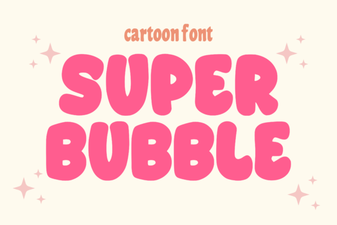 Crafting with Super Bubble Fonts for Projects
 Beautiful Smile Font: a Creative Web Project
 Designing with Glossy Bubble Fonts for Creative Projects
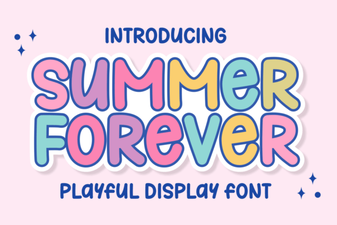 Summer Forever Font: Design Styles & Free Downloads
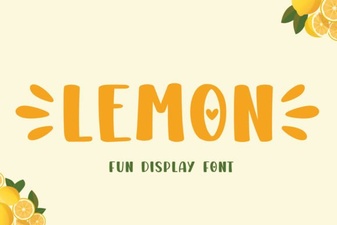 Lemon Font: Fresh Designs for Creative Projects
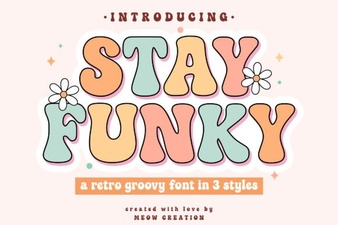 Unleash Your Projects with the Stay Funky Font